
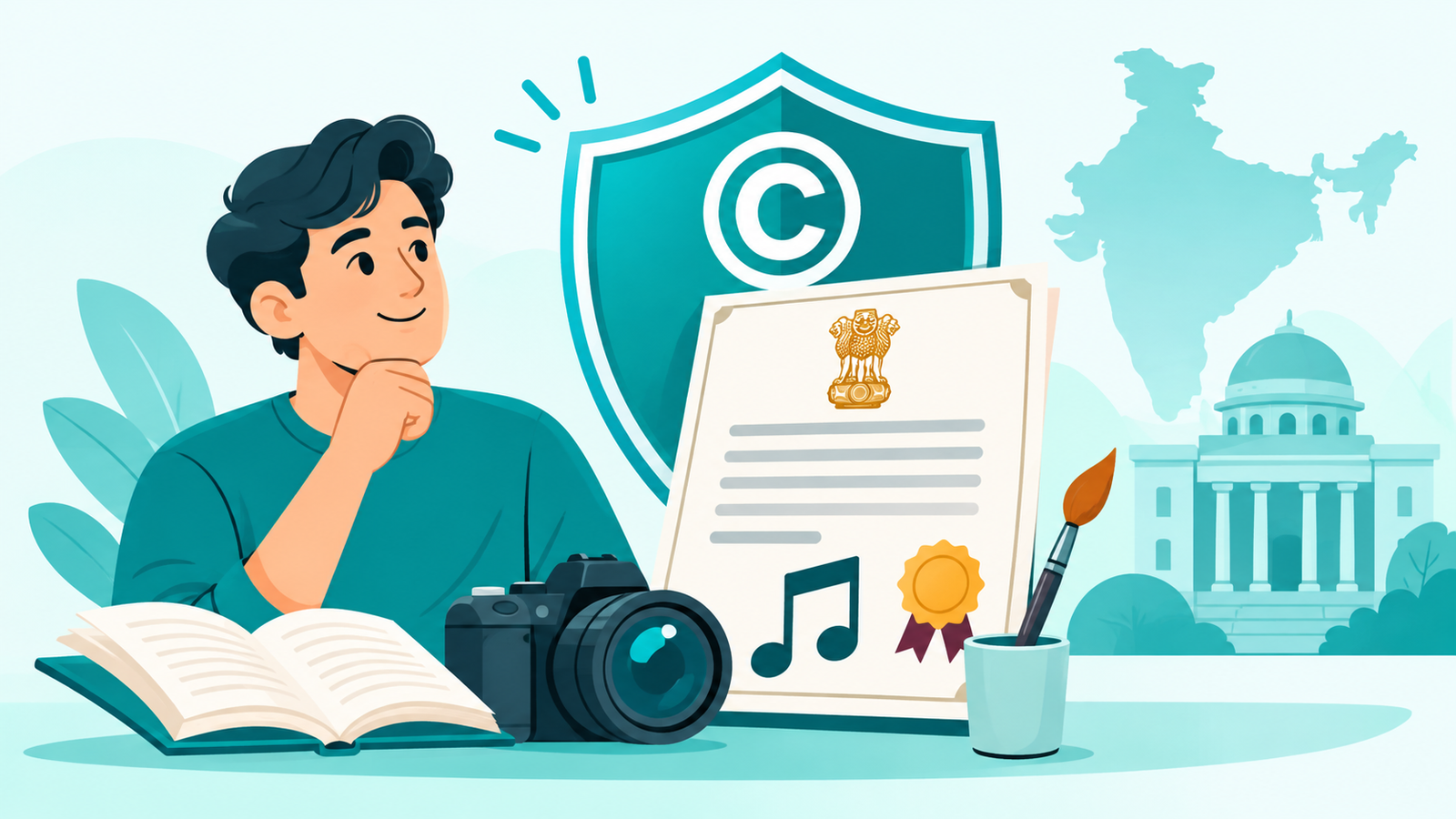
Copyright protects original creative work such as articles, software code, music, videos, photographs and artwork. It arises automatically when you create the work, but registering it gives strong evidence of ownership.
What can be registered?
- Literary works including books, website content and software code
- Artistic works such as drawings, logos as artwork and photographs
- Musical works and sound recordings
- Cinematograph films
Why register?
- Creates a public record of ownership
- Helps in disputes and takedown requests
- Makes licensing and assignment deals easier
- Supports claims against copying
Documents and details required
- Applicant and author details
- Title and description of the work, with language and year of publication
- Copies of the work, as required
- No-objection certificate from the author if the applicant is not the author
- Power of attorney if an agent files on your behalf
Registration process
- File the application with the Copyright Office with the prescribed fee
- A diary number is issued and a waiting period for objections follows
- If objections arise, a hearing may be held
- After scrutiny the Registrar enters the work in the Register and issues the certificate
Timelines vary with objections and workload. If your concern is your brand name or logo as a source identifier, trademark may be the better tool. See our comparison guide.
Get help from JiStartup
We prepare and file copyright applications. See our copyright registration service. Contact our team for a free consultation.
This article is general information, not legal or tax advice. Rules, fees and due dates change, so confirm current requirements on the official portal or with a professional.
